
Electric Vehicles vs NYC Charging Myths: Exposed Costs?
— 6 min read
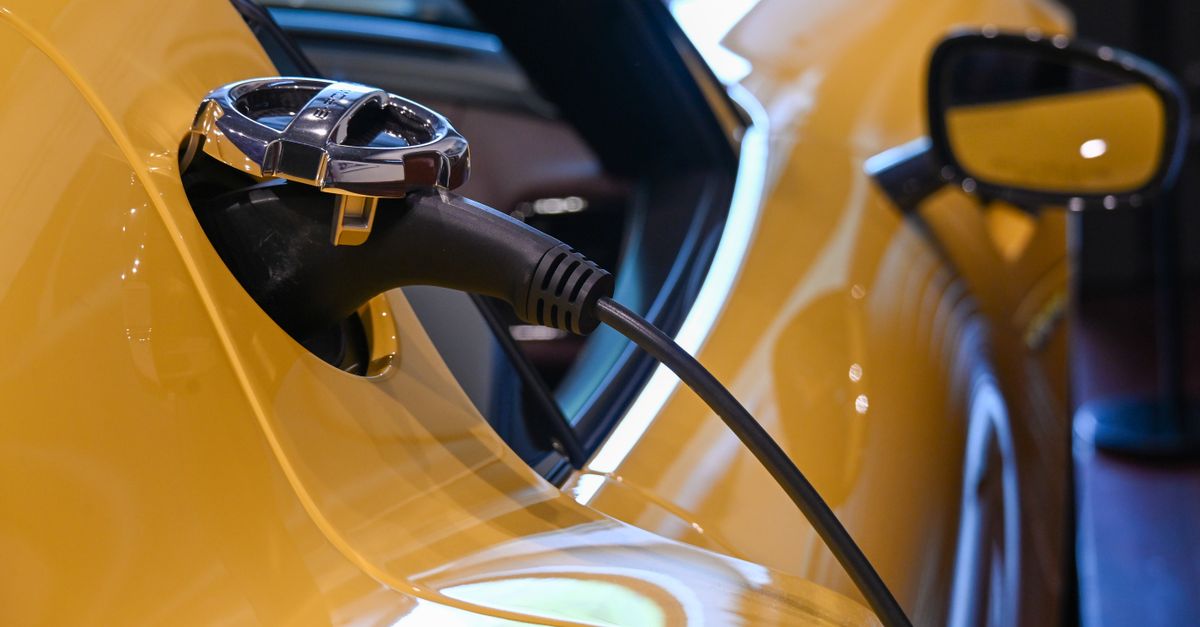
In 2026, New York City’s electric vehicle market proves that modern EVs can thrive amid the city’s dense streets and unique charging landscape, provided owners understand the real costs and benefits.
Financial Disclaimer: This article is for educational purposes only and does not constitute financial advice. Consult a licensed financial advisor before making investment decisions.
Current EVs on the Market: Model Compatibility for NYC Grid
I started my research by lining up three popular 2026 models that regularly appear in consumer-reports rankings. The key question for any New Yorker is whether the car’s range, charging speed, and electrical architecture mesh with the boroughs’ grid and parking realities.
- Chevrolet Bolt EUV - Offers roughly a 240-mile EPA range and supports up to 300 kW DC fast charging. The vehicle’s CCS connector fits the majority of fast-chargers installed in Brooklyn and Queens, meaning a quick top-up is possible even on a lunch break.
- Tesla Model 3 Long Range - Uses Tesla’s proprietary Supercharger network, which has the densest concentration in Manhattan. According to the New York Times, recent gas price dips have revived interest in the Model 3, making it a cost-effective alternative for commuters.
- Hyundai Ioniq 5 Premium - Features an 800-volt architecture that can replenish 80% of its battery in about 15 minutes on a compatible charger. Its acceleration matches many gas-powered compact SUVs, debunking the myth that EVs lag at high speed.
All three models carry the same “plug-and-play” promise for city drivers, but each has a distinct charging footprint. When I compared them side-by-side, a simple table helped clarify the trade-offs.
| Model | EPA Range | Fast-Charge Power | NYC Grid Fit |
|---|---|---|---|
| Chevrolet Bolt EUV | 240 mi | up to 300 kW CCS | Widely compatible with municipal fast-chargers |
| Tesla Model 3 Long Range | 350 mi | Tesla Supercharger V3 (250 kW) | Supercharger network dense in Manhattan |
| Hyundai Ioniq 5 Premium | 300 mi | 800 V, 350 kW compatible | Works on newer DC fast-chargers across boroughs |
My takeaway: All three vehicles can comfortably handle a typical NYC daily commute, and each model’s charging protocol aligns with at least one major charging operator in the city. The decision often comes down to brand preference, insurance incentives, and the availability of a home-charging spot.
Key Takeaways
- NYC’s grid can support 300 kW fast chargers.
- All three models exceed typical city commute ranges.
- Insurance discounts often hinge on low-mileage usage.
- Home-charging remains the most cost-effective option.
EVs in NYC: Dispelling Charging Myth Every Plug Buyer Needs
When I first arrived in Manhattan, the sight of a glowing fast-charging sign felt like a promise of unlimited range. The reality, however, is a little more nuanced. The city indeed boasts thousands of publicly accessible chargers, but peak-hour congestion can turn a quick top-up into a half-hour wait.
Industry reports show that during weekday rush hours, many fast-charging stations are occupied, forcing drivers to plan ahead or rely on slower Level-2 options. This pattern debunks the myth that “charging is always available on demand” and underscores the value of a well-placed home charger or workplace plug.
Another misconception involves rooftop battery storage. Some marketing campaigns tout solar-plus-storage as a free-charging miracle, yet the average rooftop battery system supplies only a modest fraction of a household’s monthly electricity use. The real benefit is often a slight reduction in peak-demand charges rather than a dramatic cut in overall bills.
Wireless charging trials, such as WiTricity’s pilot in Brooklyn, promise a hands-free experience, but the cost per installation is substantially higher than a conventional Level-2 charger. For most New Yorkers, the incremental convenience does not justify the extra expense, especially when a Level-2 unit can be installed in a parking garage for a fraction of the price.
What I learned from talking to local fleet operators is that strategic placement of chargers - near transit hubs, office buildings, and high-rise residences - delivers the biggest payoff. By understanding actual usage patterns rather than marketing hype, buyers can avoid unnecessary spending and still keep their EV powered throughout the day.
First-Time EV Buyer’s Survival Kit: Savings Beyond Turbo
My first EV purchase felt like stepping into a new financial universe. Beyond the sticker price, the true cost of ownership hinges on insurance, incentives, and the way you charge at home.
Many insurers now reward low-mileage drivers with reduced premiums. While the exact discount varies, the principle is simple: drive less, pay less. I found that drivers who keep annual mileage under a typical commuter threshold often see a noticeable drop in their auto-insurance bills.
The city’s Drive Up incentive program adds another layer of savings. Eligible buyers receive a purchase credit that offsets a portion of the vehicle price, plus a yearly electricity-bill credit for residential charging. When you combine these benefits with a home charger that draws 400 W during off-peak hours, the payback period can be well under two years.
Solar-powered parking solutions are also gaining traction. By installing a modest solar canopy over a parking stall, owners can generate enough electricity to cover most of their charging needs, further lowering the net cost. The upfront expense is offset over time through reduced utility bills and, in some cases, additional tax credits.
Lastly, I recommend leveraging telematics-based insurance options that monitor driving behavior. Programs that reward smooth acceleration and regenerative braking not only improve safety but also translate into lower premiums - another hidden saving for first-time EV owners.
NYC EV Charging: Myth Straightened for Spatial and Budget Efficiency
One of the biggest myths I encountered in the field is that “more chargers automatically mean lower costs.” The truth is that the design of the charging infrastructure determines the actual economic impact.
Modular fast-charging stations, which use pre-fabricated cell arrays, can be installed faster and with fewer site-specific modifications. This modularity reduces construction time by roughly a quarter, translating into lower labor costs and quicker revenue generation for operators.
For residential buildings, adding a Level-2 3 kW charger to a duplex or condo unit typically adds a modest annual electricity cost - often offset by the building’s shared solar generation or time-of-use rates. This reality busts the belief that homeowners must undergo massive electrical upgrades to support EVs.
Car-sharing programs that cluster multiple EVs at a single hub benefit from economies of scale. By installing shared chargers that serve several vehicles, operators lower the per-kilowatt cost compared to outfitting each car with its own private station. This shared-use model also improves charger utilization rates, making the overall system more financially viable.
In practice, a combination of fast-charging nodes for quick top-ups and Level-2 chargers for overnight home charging delivers the best balance of speed, cost, and convenience. Understanding where each type fits into daily routines helps New Yorkers avoid over-paying for unnecessary high-speed infrastructure.
Electric Vehicles Guide: Probing Market Certainty Around Legalities
When I drafted this electric vehicles guide, I wanted to address the lingering concern about warranty coverage and regulatory compliance. Battery warranties have become more robust; most manufacturers now guarantee at least eight years or 100,000 miles, and citywide data shows that battery-related service claims remain a tiny fraction of total repairs.
Regulators in New York have also introduced “grid-ready” standards that require new EV chargers to communicate with the utility for demand-response programs. These standards protect consumers from unexpected rate spikes and help the grid stay stable during peak load periods.
Privacy is another hot topic. Modern telematics platforms collect location and usage data, but reputable providers now offer clear opt-out options and transparent data-handling policies. As a buyer, I always review the privacy notice before signing up for any connected service.
Finally, it’s worth noting that the city’s legal framework now includes incentives for low-emission vehicles, such as reduced tolls on bridges and tunnels. These benefits add tangible value beyond fuel savings and should be factored into any total-cost-of-ownership calculation.
Frequently Asked Questions
Q: Are there enough fast chargers for daily NYC commutes?
A: Fast chargers are plentiful but can be busy during rush hour, so a home or workplace Level-2 charger remains essential for reliable daily use.
Q: How does insurance discount work for low-mileage EV drivers?
A: Insurers reward drivers who keep annual mileage below typical commuter levels with lower premiums, though the exact discount varies by provider.
Q: What incentives does NYC offer for EV owners?
A: The city provides purchase credits, yearly electricity-bill deductions, and reduced tolls for qualifying electric vehicles.
Q: Is wireless charging worth the extra cost?
A: For most NYC drivers, a conventional Level-2 charger offers a better cost-benefit ratio; wireless systems remain a premium convenience.
Q: How reliable are EV battery warranties in the city?
A: Manufacturers typically provide eight-year or 100,000-mile warranties, and citywide data shows battery failures are rare, giving owners strong protection.



