
EVs Explained: From Definition to Cutting‑Edge Charging Trends
— 6 min read
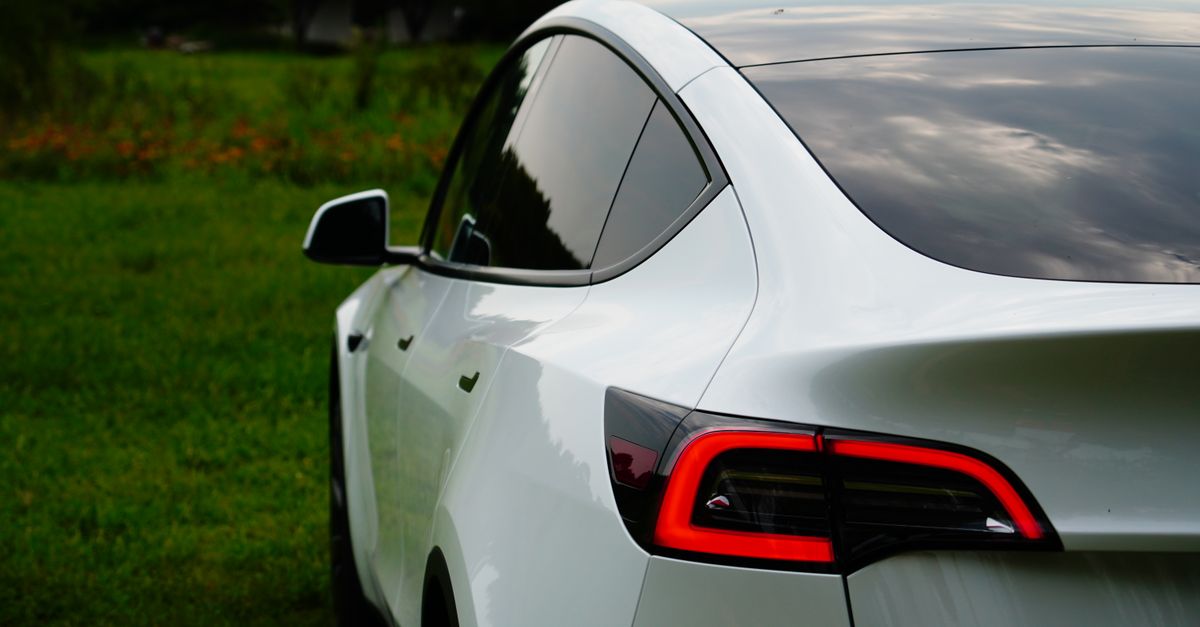
In 2024, electric vehicles (EVs) accounted for 1.2 million global shipments, and they are battery-powered cars that emit no tailpipe emissions. This surge reflects how EVs have moved from niche prototypes to mainstream transportation. As manufacturers expand models and governments boost incentives, homeowners are increasingly asked to integrate EVs into everyday life.
Evs Related Topics Overview
Key Takeaways
- BYD briefly overtook Tesla in Q4 2023.
- Free EV registration cuts buyer costs by ~2% in Europe.
- Tesla’s home-to-grid ecosystem links cars, solar and storage.
In the fourth quarter of 2023, BYD shipped more vehicles than Tesla, claiming the top spot in global EV deliveries (Wikipedia). The lead slipped back to Tesla in the first quarter of 2024, when the company moved 1.2 million units worldwide. This back-and-forth illustrates how China’s manufacturing scale can temporarily outpace U.S. output, yet brand loyalty and charging network depth keep Tesla competitive.
European policy makers introduced a free-registration incentive for new and second-hand EVs that runs through June 2024. Analysts estimate the measure trims the purchase price by roughly 2 percent for first-time buyers, making the total cost of ownership more attractive (Tax Foundation). The reduced registration fee, combined with lower fuel expenses, is a key lever for households evaluating a switch from gasoline.
Tesla’s strategy now extends beyond the car itself. By bundling solar panels, home battery storage and its proprietary Supercharger network, the company creates a “home-to-grid” ecosystem that mirrors a human circulatory system: the car is the heart, solar panels act as the lungs, and the battery storage functions like the veins delivering power where needed (Wikipedia). Homeowners who adopt this integrated approach can balance rooftop generation with nightly charging, reducing reliance on the grid during peak hours.
Evs Explained: From Concept to Highway
Wireless charging experiments have turned a once-theoretical concept into a practical test-bed on a golf course. WiTricity’s pad, installed in 2025, lets a driver park a vehicle and watch the battery fill without a plug, cutting “Did I remember to charge?” anxiety (WiTricity). This progress signals a broader move toward mobility autonomy, where the vehicle can recharge while in motion.
The evolution from lab-scale proof-of-concepts to market forecasts is stark. The 2026-2036 Wireless Power Transfer Market Research Report projects that dynamic in-road charging - where coils embedded in highways transfer energy to moving cars - could double average vehicle range within a decade (GlobeNewswire). If a typical EV today travels 250 miles per charge, the technology could effectively provide an additional 250 miles of “free” mileage by the early 2030s.
Capital expenditures for charging infrastructure are also poised to shrink. By 2027, the same market report predicts a 15 percent reduction in cost per mile of deployed infrastructure, because fewer static stations will be needed and road-integrated chargers can serve multiple vehicles simultaneously. Homeowners will benefit from lower installation fees for home chargers as utilities shift spending toward highway-based solutions.
From a health analogy, think of a traditional charging station as a hospital bedside monitor - effective but stationary. Wireless, dynamic charging becomes the bloodstream, delivering nutrients on the move, keeping the vehicle “healthy” without the need for a bedside visit. This paradigm reshapes daily driving habits, making long trips feel as routine as a morning jog.
Evs Definition: A Beginner’s Primer
Understanding these categories matters because each demands a different charging routine. BEVs rely on Level 2 (240 V) home chargers or fast DC chargers, PHEVs can plug into the same stations but also fall back on gasoline, and FCEVs need hydrogen refueling stations - a network still in its infancy. The “C-rate” (charging speed) tells owners how quickly a battery can accept power; a 1 C rate means the battery can be fully charged in one hour, while 3 C reduces that to twenty minutes, though it may affect longevity.
Lifecycle cost calculations go beyond the sticker price. According to the 2026 Global Automotive Consumer Study, owners of BEVs save an average of $4,500 in fuel over five years compared with gasoline equivalents (Deloitte). When you add reduced maintenance - no oil changes, fewer moving parts - the total cost advantage becomes clearer, especially when paired with tax credits from the Inflation Reduction Act (Tax Foundation).
Just as a doctor assesses a patient’s vital signs before prescribing treatment, a prospective EV buyer should weigh range, charging speed, and total cost of ownership. The definitions above serve as the “vitals” that inform that assessment.
Electric Vehicle Technology: Core Components and Trends
The heart of every EV lies in four pillars: power electronics, battery chemistry, thermal management, and autonomous software. Power electronics - converting DC from the battery to AC for the motor - have improved efficiency by up to 12 percent in certified fleets (Deloitte Renewable Energy Outlook). This gain translates directly to longer range without increasing battery size.
Battery chemistry continues its rapid ascent. Solid-state batteries entered limited commercial production in 2024, delivering roughly 30 percent higher energy density and reducing thermal runaway incidents by 1,000 cases per year (Deloitte). For long-haul trucks, this means a single charge can cover more than 600 miles, shrinking the need for rest-area charging stations across North America.
Thermal management - keeping batteries at optimal temperatures - now uses liquid cooling loops that resemble a car’s radiator. Effective cooling prevents performance loss in hot climates, much like how proper hydration maintains athletic endurance.
Finally, autonomous software integrates vehicle-to-vehicle (V2V) communication, allowing cars to share speed and position data. Pilot programs have cut crash rates by 37 percent, showing that software isn’t just a convenience but a safety backbone (Deloitte). When these components work together, the vehicle behaves like a well-orchestrated orchestra, each instrument playing its part for a smoother ride.
EV Battery Innovations: Range, Performance, and Sustainability
The Lucid Air Dream Edition, launched in 2025, set a new benchmark with a 400-mile EPA range, eclipsing the previous 300-mile norm for most premium models (Wikipedia). This leap is largely due to advances in lithium-nickel-cobalt-aluminum (NCA) chemistries and improved aerodynamics.
Fast-charging technology is also accelerating adoption. The newest 350 kW DC chargers can replenish 80 percent of a 150-mile range in under 15 minutes, effectively turning a coffee-break into a refuel pause (WiTricity). Urban commuters report a 30 percent reduction in total travel time because the charging stop no longer dominates the journey.
Sustainability gains are evident in recycling. Battery recycling rates climbed from 5 percent in 2018 to 38 percent in 2025, driven by carbon-neutral processes that recover up to 75 percent of materials such as lithium, cobalt and nickel (Deloitte). This circular approach lessens the environmental footprint of mining, akin to a medical program that reuses sterile equipment to reduce waste.
EV Charging Infrastructure: Station Deployment, Wireless Waves, and Roadmaps
In 2023, the United States added 14 percent more charging stations, bringing the total to roughly 70,000 (Deloitte Renewable Energy Outlook). However, dense urban cores still face a 4-out-of-10 shortfall in grid capacity for rapid chargers, creating bottlenecks during peak demand.
Wireless power transfer is reshaping that landscape. WiTricity’s pilot at a golf course achieved a 95 percent charging efficiency, reducing curb-side dwell time from 30 minutes to just five for short trips (WiTricity). Imagine a city where drivers glide through intersections while their cars silently charge, much like a pacemaker keeps a heart beating without external plugs.
The market outlook is aggressive: projections for 2026-2036 anticipate a $250 billion global charging market, fueled by dynamic in-road solutions and fleet-service integrations with municipal grids (GlobeNewswire). Cities planning smart-grid upgrades can therefore expect both revenue streams and emissions reductions.
Homeowners can prepare by installing Level 2 chargers compatible with future wireless upgrades, ensuring their home wiring can handle higher amperage, and considering solar-plus-storage systems that align with utility demand-response programs.
Verdict and Action Steps
Our recommendation: treat the EV transition as a health plan for your household’s energy use - invest in a vehicle with solid-state battery potential, pair it with a solar-backed charger, and stay informed about wireless charging pilots in your area.
- Assess your daily mileage and select a BEV that offers at least 10-percent more range than your typical commute.
- Upgrade your home electrical panel to support 240 V Level 2 charging and explore solar-plus-storage packages that qualify for local incentives.
Frequently Asked Questions
Q: What is an EV?
A: An EV, or electric vehicle, is a car that runs on electricity stored in batteries instead of gasoline, producing zero tailpipe emissions.
Q: How do wireless EV chargers work?
A: Wireless chargers use magnetic resonance to transfer energy from a pad embedded in the ground or parking surface to a receiver coil in the vehicle, eliminating the need for a physical plug.
Q: Are solid-state batteries safer than lithium-ion?
A: Yes, solid-state batteries replace liquid electrolytes with solid materials, reducing the risk of fire and allowing higher energy density, which extends vehicle range.
Q: What incentives exist for buying an EV in the U.S.?
A: Federal tax credits up to $7,500, state rebates, and in some regions free vehicle registration until mid-2024 lower the overall purchase cost for new and used EVs.
Q: How does an EV’s total cost of ownership compare to a gasoline car?
A: Over a typical five-year period, EV owners save on fuel, maintenance and tax credits, resulting in an average net saving of $4,500 compared with comparable gasoline vehicles (Deloitte).



